Family-owned since 1953
Slab Leak Repair in Norwalk. Priced before we start.
55+ five-star reviews
CSLB #992029 (license lookup, opens in new tab)Same-day serviceLocally & family-owned
A slab leak is a leak in a water line that runs under a home's concrete foundation, and slab leak repair fixes it either by opening the floor at the leak or by rerouting the water around it. Mickey Wilson of One Hour Plumbing Service locates and repairs slab leaks across southeast LA County and north Orange County, and he prices both options before any concrete is touched.
Signs of a slab leak
- A warm or hot spot on the floor, often noticed barefoot on tile
- Water running somewhere when every fixture is off
- The meter's leak indicator spins with everything closed
- A water bill that jumped and stays high
- Damp carpet, a wet tack strip, or warped wood flooring with no spill to explain it
- The water heater seems to run all the time (a hot-side leak)
- Water pressure that dropped for no clear reason
How Mickey handles it
- 01Mickey starts at the meter. If it's still moving with everything off, there's a leak on the supply side.
- 02He separates hot from cold at the water heater and pressure tests the lines to find which run is losing water.
- 03Listening equipment, plus a thermal read on hot-side leaks, narrows it to one spot on the floor.
- 04You get two prices: a spot repair through the slab, and a reroute that abandons the leaking line. He tells you which he'd do and why.
- 05The repair is pressure tested before anything is closed up, and the work is warrantied.
Why slab leaks happen in this area
Norwalk and the cities around it have both kinds of foundations. The older tracts are mostly raised foundations with a crawlspace, where a leaking pipe drips onto soil you can get to. The later tracts toward Cerritos are mostly slab, with copper water lines laid in the ground before the concrete was poured.
That copper is now 60 years old or more. Hard water scales the inside. Soil, moisture and contact with concrete work on the outside. Every time the hot water runs, the pipe expands a little and rubs. Pinholes form, and the hot line usually goes first. The water has nowhere to go but into the soil and up through the slab, so the first sign is usually a warm floor or a high bill. A puddle comes much later, if at all.
Spot repair, reroute or repipe
Once the leak is located, there are three ways to fix it. Mickey prices each one that makes sense for your house and lets you choose:
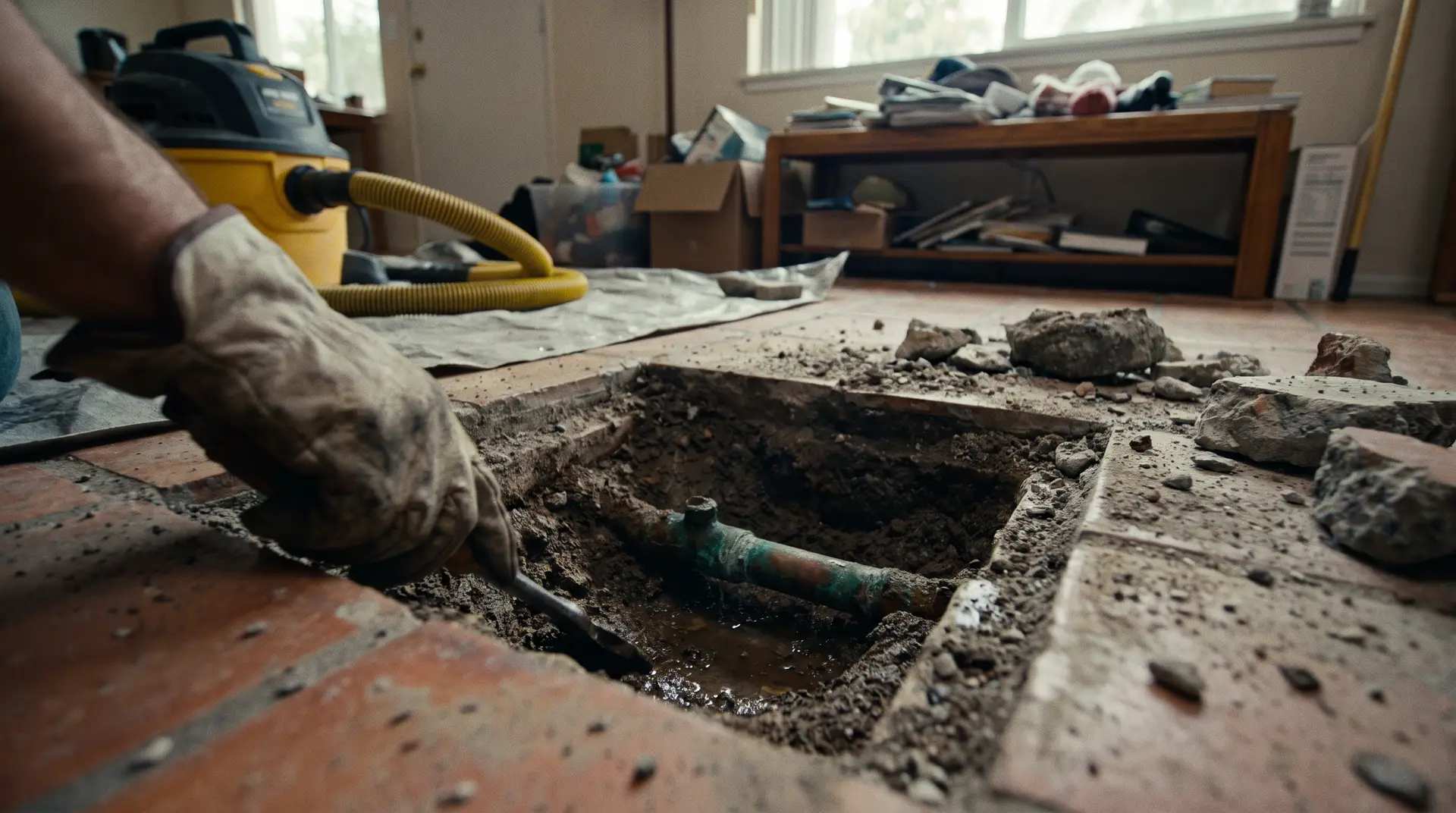
- Spot repair: a small opening is cut in the slab at the marked spot, the pipe is dug out and repaired, tested, backfilled, and the concrete is patched. The flooring at that spot has to come up. Best when the pipe is sound and this is the first leak.
- Reroute: the leaking line under the slab is capped and left in place, and new copper or PEX runs through the attic or walls to the same fixtures. No concrete is broken, and drywall gets opened and patched. Best when the pipe is old or the leak sits under flooring you don't want to lose.
- Repipe: all the supply lines in the house are replaced. It makes sense after repeated slab leaks, or when the rest of the plumbing is failing too.
What to do while you wait
Find your main shutoff, usually where the line enters the house, and learn how to close it. If water is coming up through the floor, close it now. On a hot-side leak, you can often close the cold supply valve on top of the water heater instead, which stops water to the hot lines while the cold side keeps working. Write down the meter reading, run no water for an hour, and read it again. That number helps with the diagnosis and with an insurance claim.
Mickey answers his own phone 24/7, holidays included, so you can call the day you notice it. If you aren't sure the leak is under the slab yet, the leak detection page covers how a hidden leak gets found anywhere in the house.
Straight prices, no bait
Free estimates, by phone or in person. No "$99 special" bait. The price you're quoted is the price, and it doesn't change without your OK.
People also call about
Available in Garden Grove, Los Alamitos, Seal Beach, Westminster and every city we serve.
Licensed, permitted, and checkable
One Hour Plumbing Service holds California contractor license #992029. You can look it up on the Contractors State License Board. Work that needs a permit, such as a repipe, a water heater, or a gas line, is permitted and inspected through the City of Norwalk or your own city. If you smell gas, leave the house and call SoCalGas at 1-800-427-2200 before you call anyone else.
Tips from Mickey on slab leak repair
Common questions
What causes slab leaks?
Mostly age and water chemistry. Copper lines under a slab corrode from hard water inside and soil contact outside, and they rub against concrete and gravel as they expand and contract with hot water. Pinholes form, usually on the hot side first. Kinks or nicks from the original install can also show up as leaks decades later.
Is a slab leak an emergency?
It depends on how fast it's leaking. If water is coming up through the floor or the bill is climbing fast, shut off the main and call right away. If it's a warm spot and a meter that creeps, you have a little time to get it located and priced, but every day it runs it soaks the soil under the house and wastes water.
Spot repair or reroute: which is better?
A spot repair opens the slab at the leak, fixes the pipe and patches the concrete. It's the cheaper choice when the pipe is in good shape and this is the first leak. A reroute runs a new line through the attic or walls and abandons the one under the slab. It costs more, but no concrete gets broken and the next pinhole in that old pipe stops mattering. After a second slab leak, a reroute or repipe is usually the smarter money.
How do you find a slab leak without breaking up the floor?
By narrowing the search before anything is opened. The meter test confirms the leak. Isolating hot from cold cuts the search in half. Pressure testing shows which run is leaking. Then acoustic equipment picks up the sound of water escaping under the concrete, and a thermal camera helps on hot lines. The goal is one marked spot.
Does homeowners insurance cover a slab leak?
Policies vary a lot. Many cover the cost of getting to the pipe and the damage the water caused, and not the pipe repair itself. Call your insurer before work starts. Mickey writes down what he found and what he did so you have it for a claim.
How long does a slab leak repair take?
Locating the leak is usually done the same visit. A spot repair is often finished in a day, with the concrete patch left to cure. A reroute takes longer depending on how far the new line runs and how much drywall has to be opened. You know the plan before he starts.
Will the leak come back?
The section he repairs won't, and the work is warrantied. If the rest of the copper under the slab is the same age, though, it can develop pinholes in other spots. That's the honest reason to think about a reroute or repipe after a second leak.
Need a plumber?Call or text now.
Open 24 hours · Free estimates · Licensed & bonded
