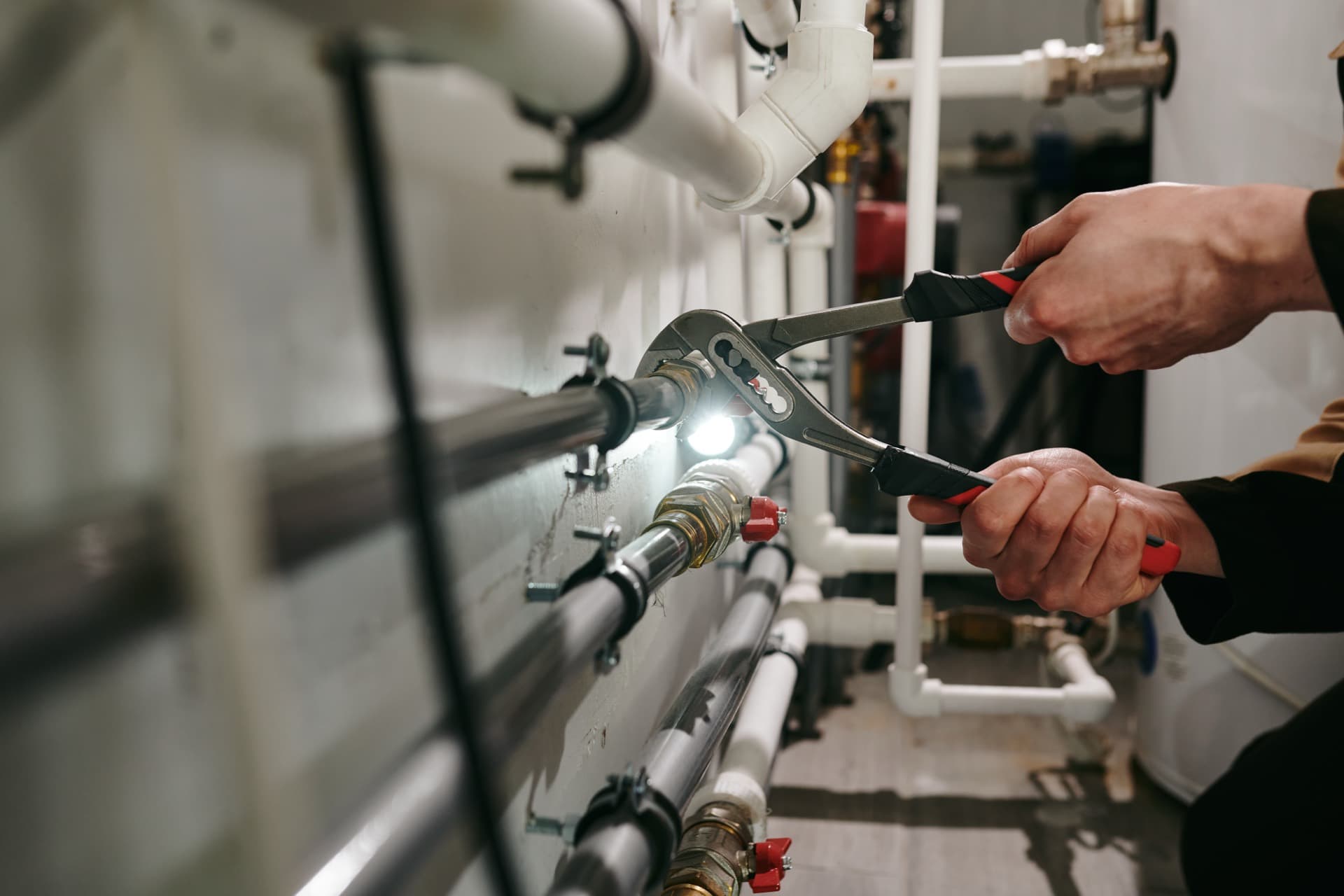
Galvanized supply lines
Homes from the 1920s through the 1950s were plumbed with galvanized steel. It rusts from the inside until the pipe is nearly closed. The signs are low pressure, rusty water first thing in the morning, and a shower that goes weak when someone runs the kitchen sink.
Cast iron drains
The drain lines under an older Whittier house are usually cast iron. After decades the bottom of the pipe wears thin and cracks, and the joints start to weep. You may never see it. What you notice is a sewer smell near the floor vents, a drain that gurgles, or damp soil under the house.
Clay sewer line to the street
From the house to the street, the sewer is usually clay pipe laid in short sections. Roots from mature trees get in at the joints. If the main line backs up once or twice a year, this is the likely reason, and a camera will show it.
Layers of old repairs
A house that has had several owners usually has several generations of plumbing. Copper spliced to steel without the right fitting corrodes at the connection. Old rubber couplings on drain lines slip. These are small fixes when they are found early.
Why the raised foundation helps
Most of these homes sit on raised foundations, which means the pipes can be seen and reached from the crawl space. Repairs and repipes are done from underneath and through the attic, with small openings that get patched. On an older Whittier home that usually means the original plaster and tile stay where they are.
Get it looked at for free
Mickey will go under the house and look at the supply lines, the drains, and the connections. The under-house inspection is free. You get a straight answer on what is fine, what to keep an eye on, and what needs work now. One Hour Plumbing Service has been fixing homes in this area since 1953.
Related service: Free Under-House Inspection
Service area: Plumber in Whittier